Ceremonies and Rituals
– What the ‘Amesbury Archer’ taught me.
We do spiritual ceremonies as human beings in order to create a safe resting place for our most complicated feelings of joy or trauma, so that we don’t have to haul those feelings around with us forever, weighing us down.
Elizabeth Gilbert, Eat, Pray, Love
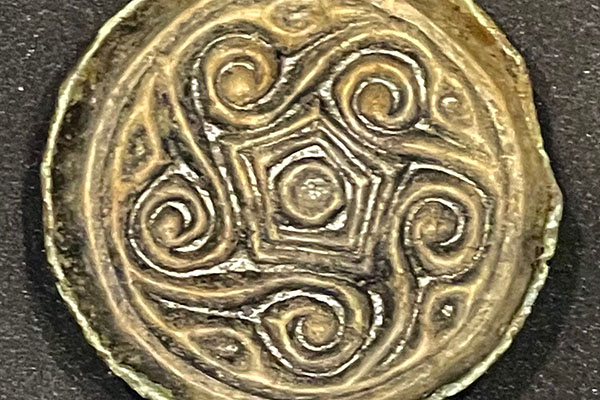
Gazing through the glass of the case that is now the ‘Amesbury Archer’s’ final resting place, it was as though there was a ribbon of human connection stretching back through time. I had been drawn to make the journey to Salisbury Museum to see ‘The Archer’ as he presents not just a tantalising historical mystery, but evidence of how the rituals we have now hold the essence of those like the Bronze Age Amesbury ‘Archer’s…and even further back.
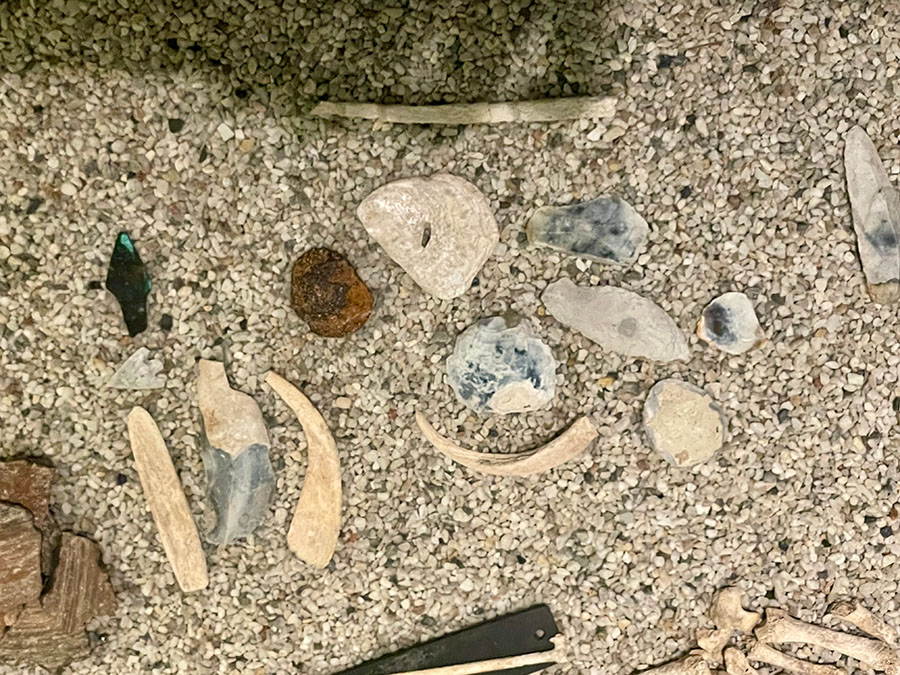
‘The Amesbury Archer’ may be a bit of a misnomer. He is so-called due to the arrow heads found around his body. But other gravegoods point to him being a metal worker – a profession that was considered high status with links to ‘other worldly activites’. Isotope analysis shows that he grew up in what is now Switzerland. The reasons for this man to make such a long journey to the area so close to the then-newly built Stonehenge are now lost to time. Was he on his way to Stonehenge on a pilgrimage or to find a cure? (He had a knee anomaly that must have caused him life-long pain and there was evidence of a large mouth abscess marked into his jaw bone). Was he involved in the building of Stonehenge? There are so many unanswerable questions. But what we can ascertain is that the ‘Archer’ must have been a well-respected person in order to merit such a careful, tender and rich burial. We can never know if words were spoken or if prayers were offered to the gods, the stars or nature but we know that his valuable possessions and gifts were laid around him with apparent attention to detail and, (dare we say?) affection.
We may not know his name, nor the details of his life and death but the nature of the ‘Archer’s’ burial shows us that his life and death meant something to the people around him. And this is why ceremonies and rituals are so important – they are markers of our love, affection and respect. They also present a space of community where deep emotions can be felt and honoured, whether we are celebrating the joy of a new beginning or mourning the finality of an ending or loss.
While a wedding or partnership ceremony, funeral or memorial gathering do not convey the entirety of our emotional experience, rituals matter; they allow us to mark an important starting point in our life, to feel we’ve honoured a loved one as we say goodbye, to find a letting go and a sense of cleaving with our family and wider community. And, as Elizabeth Gilbert says in the qote above, ceremonies give us a vehicle to lay our emotions down; to gather and share a common ‘big’ human experience. The desire we have today to take great care over our rituals and ceremonies has deep roots and long, long echoes. So when we join with others to celebrate, mourn, shed tears or offer the warmth of a hug; when we write messages for lost loved ones, gather pebbles, scatter ashes; when we join hands and offer our lives to each other, we are not simply ‘doing what is expected’; we are doing something profoundly human.
More Mindings and Musings
The ‘Holding Moment’
I’ve been thinking about moments of comfort. I think I’m fairly safe in saying that to live fully means that at some points in our lives we have to navigate dark times. And with the benefit of time we realise we can survive and learn, and that we can discover new ways of being in the world.